









Tel
18617068322
05
2026-08
I. Main Application Scope
1. Consumer Electronics
Smart‑home modules (WiFi / Bluetooth modules, power boards, sensor sub‑boards);
Separate connections for main control boards, display boards and key boards of small home appliances;
Camera modules, battery adapter boards, fan/motor wiring boards.
Characteristics: High volume, cost‑sensitive, low mating cycles; tin‑plated, 2.54 mm THT versions are widely adopted.
2. Industrial Control & Security Surveillance
PLCs, gateways, industrial switches, main‑to‑IO sub‑boards for access‑control devices;
Camera main‑board & IR lamp board, hard‑disk adapter boards, power adapter boards.
Characteristics: Subject to vibration, wide temperature variation and long‑term standby; phosphor‑bronze gold‑plated versions with locking latches are preferred.
3. Embedded Development & Module Ecosystem
Core boards and expansion boards for Arduino, STM32, ESP32, Raspberry Pi;
Debug interfaces, Dupont‑wire test points, fixture test sockets.
Characteristics: Frequent mating‑unmating, high interoperability requirement; 2.54 mm is the industry‑wide standard.
4. Automotive Electronics (Automotive‑Grade Only)
BMS battery‑management systems, central‑control sub‑boards, drive boards for vehicle lamps, on‑board sensors.
Characteristics: Severe vibration, large temperature swing, low contact‑resistance requirement; automotive‑grade gold plating, locking latches and high‑temperature‑resistant plastic housings are mandatory. Standard commercial‑grade pin/female headers shall not be directly deployed in vehicles.
5. Medical Equipment & Test Fixtures
Sub‑boards for medical control circuits, burn‑in test boards, fixture adapter boards.
Characteristics: Priority on reliability, serviceability and easy assembly/disassembly; gold‑plated contacts and high‑cycle‑life spring contacts are selected.
II. Core Advantages and Positive Engineering Impacts
High universality and well‑established standardization
The 2.54 mm ecosystem is mature, with interoperability among Dupont wires, fixtures and modules. Sourcing is convenient, alternative parts are abundant and prototyping cost is low.
Impact: Fast prototype validation, low supply‑chain risk, well‑suited for modular hardware design.
Simple structure and low BOM cost
Lower unit price at equal pin count compared with precision board‑to‑board (BTB) connectors and wire‑to‑board terminals.
Impact: Effective BOM cost control for high‑volume consumer products; suitable for mature mass‑production projects with limited budget.
Mating‑separable, convenient for repair and debug
Board‑to‑board disconnection enables rework, sub‑board replacement and on‑site maintenance.
Impact: Avoid scrapping complete assemblies; friendly for product testing, burn‑in and fixture interfacing.
Rich selection options
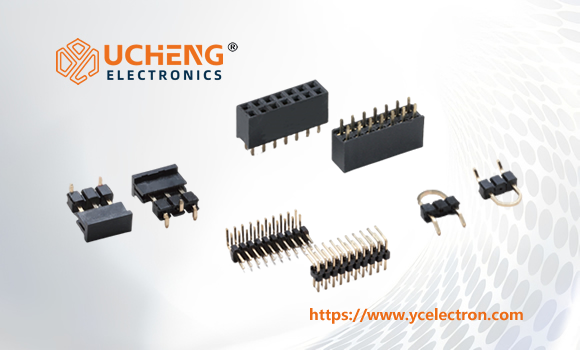
Through‑hole / SMT mounting; straight / right‑angle pins; single‑row / dual‑row; multiple stack heights. Supports vertical stacking, side‑exit routing and component clearance avoidance.
Impact: High mechanical‑design flexibility, widely applied to main‑board + daughter‑board stacking architectures.
III. Core Disadvantages and Negative Engineering Impacts
Inferior vibration resistance and mating‑cycle performance vs locked BTB / dedicated wire‑to‑board connectors
Standard non‑locking female headers rely solely on spring‑contact friction retention. Loosening and intermittent connections may occur under sustained vibration or repeated mating cycles.
Impact: Higher field‑failure risk in automotive and heavy‑vibration environments without locking latches; spring‑contact fatigue leads to intermittent faults under frequent debug operations.
Tin‑plated versions are prone to oxidation; high risk under high‑humidity or long‑term storage
Tin‑oxide films increase contact resistance; small‑signal circuits are particularly vulnerable.
Impact: Occasional contact‑fault incidents in mass production after >6‑month warehouse storage or in high‑humidity southern climates; analog small‑signal and low‑speed communication channels face elevated risks.
Limited current‑carrying capacity; not suitable for high‑power loops
Typical continuous safe current for a single 2.54 mm pin is approx. 3 A. Significant temperature rise occurs under sustained high‑current loading.
Impact: Fine‑pin pin/female headers are not recommended for high‑current power paths; local overheating and plastic housing softening may occur.
Large PCB footprint and high stack height; poor fit for ultra‑thin devices
Larger PCB occupation and higher mated height than 0.5 / 0.8 mm pitch BTB connectors at equivalent pin count.
Impact: Generally excluded from wearable devices, miniature cameras and ultra‑thin display modules.
SMT female headers carry high soldering‑process risks
Higher mass of female receptacles may cause component shifting during reflow soldering; bottom shadowing effect may result in insufficient solder wetting.
Impact: Risk of AOI escape and increased mass‑production defect rate; PCB footprint must include positioning pegs together with optimized stencil aperture design.
Constraints for high‑density interconnection scenarios
2.54 mm / 2.0 mm pitches occupy substantial PCB real estate; 1.27 mm reduces size yet raises cost and compromises interoperability.
Impact: BTB connectors are preferred for high‑speed, high‑density board‑to‑board interconnections.
Previous Page
Next Page

Yucheng – Striving for Perfection, Creating Greater Value